





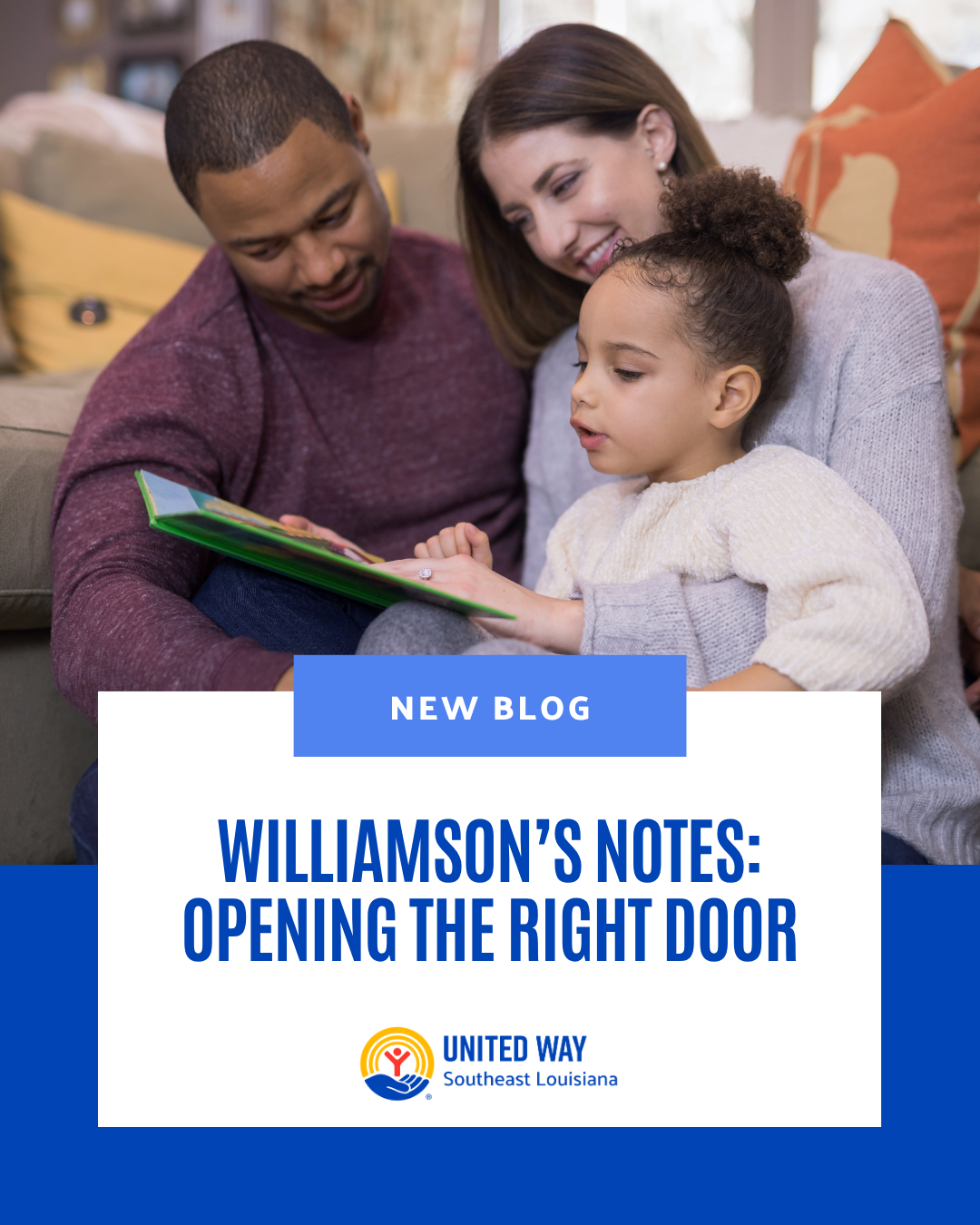
For many families in Southeast Louisiana, getting ahead is not about effort. It is about access.
Imagine standing in a hallway full of doors. Behind one door is affordable childcare. Behind another is stable housing. Another leads to a better job, healthcare, transportation, food assistance, financial coaching, or emergency support.
Now imagine being told that each door has a different form, a different phone number, a different waiting list, a different eligibility rule, and a different deadline.
That is the reality for too many ALICE households.
ALICE stands for Asset Limited, Income Constrained, Employed. These are households earning above the Federal Poverty Level but still below what it costs to afford the basics where they live. ALICE families are working, paying taxes, and doing everything they can to move forward. But too often, the path to stability is blocked by rising costs, fragmented systems, and a lack of coordinated support.
The latest United For ALICE data makes the challenge clear.
In 2024, 262,504 households across Southeast Louisiana, or 49% of all households in the region, lived below the ALICE Threshold. That means nearly half of households in Jefferson, Orleans, Plaquemines, St. Bernard, St. Tammany, Tangipahoa, and Washington parishes could not afford the basic cost of housing, childcare, food, transportation, healthcare, technology, and taxes.
These are not abstract numbers. These are our neighbors, coworkers, caregivers, childcare providers, home health aides, cooks, cashiers, delivery drivers, and friends. They are essential to our economy and our communities. And too many are still one unexpected expense away from crisis.
THE DATA SHOWS THE NEED
In Southeast Louisiana, a family of four needed $87,636 in 2024 just to cover the essentials. That is nearly three times the Federal Poverty Level of $31,200.
Even with both parents working full-time in two of Louisiana’s common jobs, a cook and a personal care aide, that family’s income still fell short of the cost of basics by $44,996.
Hard work is not the issue. The issue is the gap between what families earn and what it costs to survive.
That gap affects every part of life. It affects whether a parent can afford childcare and keep working. It affects whether a family can fill a prescription, repair a car, pay rent, save for an emergency, or prepare for hurricane season.
It affects children’s futures, workforce stability, community health, and our region’s ability to respond when a crisis hits.
OUR BOLD GOAL GIVES US DIRECTION
At United Way of Southeast Louisiana, we believe the data should lead to action.
That is why we have set a bold goal: to place 100,000 individuals living below the ALICE Threshold on a pathway to prosperity by 2035.
This goal is ambitious but not abstract. It is rooted in what we have learned from ALICE households, community partners, donors, and the data itself.
Families do not need one door opened for them. They need a clear pathway through the right doors, at the right time, with the right support along the way.
That is the heart of our pathways approach.
WHAT OUR PATHWAYS APPROACH MEANS
United Way is evolving how we invest in community solutions.
We are moving from funding individual programs alone to building a coordinated ecosystem of support that helps people move from crisis and survival toward stability and long-term prosperity.
That means aligning grants, partnerships, advocacy, and programs around the real barriers keeping ALICE households from getting ahead.
It also means centering case management, collaboration, shared data, and measurable outcomes. Families should not have to navigate a maze of disconnected systems on their own. They deserve guidance, coordination, and support that helps them keep moving forward.
This is one of the most significant evolutions in our grantmaking approach in recent history. And it is driven by our bold goal.
WHY CASE MANAGEMENT MATTERS
Systems are more complex than ever.
A household may need help with housing, childcare, transportation, food, healthcare, employment, financial planning, and disaster recovery all at once. Without coordination, families can move from one crisis to the next without ever reaching long-term stability.
Case management helps change that.
It connects services. It removes barriers. It helps individuals and families create a plan and stay on track. Most importantly, it recognizes that progress does not happen in one appointment, one application, or one program. It happens over time.
For ALICE households, that steady support can be the difference between staying stuck and moving forward.
STRONGER PARTNERSHIPS, CLEARER OUTCOMES
This shift does not mean United Way is stepping back from partnerships. It means we are strengthening them.
We are prioritizing partners who are ready to collaborate across organizations and systems, share data, and contribute to our bold goal.
We are working to build a network where organizations are not operating in silos but are moving together toward a shared vision: more ALICE households with the resources, supports, and opportunities they need to build lasting stability and, ultimately, wealth.
This reflects what we have heard from the community, from partners, and from donors. People want to see United Way deliver deeper impact, clearer results, and stronger coordination.
And we agree.
BUILT FROM YEARS OF LISTENING AND LEARNING
Over the last several years, United Way has expanded its presence and deepened its understanding of what ALICE households need to move forward.
We expanded our work through Prosperity Centers, the United Way of Southeast Louisiana Resiliency Center founded by Rebuilding Together New Orleans, and Resource Navigators. We developed internal programs to address gaps where services were lacking. We saw firsthand how difficult it has become for families to move through complex systems without support.
At the same time, donors are asking important questions about direct, visible impact in the communities they care about.
They want to know that their investment is helping meet immediate needs and also helping families move toward lasting stability.
That is exactly what this pathways approach is designed to do.
STABILITY IS RESILIENCE
In Southeast Louisiana, resilience starts long before a disaster hits.
It starts with whether families can afford the basics today. It starts with whether a household can save a little money, keep reliable transportation, access healthcare, maintain housing, and build enough stability to withstand what comes next.
For ALICE households, one unexpected expense can change everything. A missed paycheck, medical bill, car repair, or storm can erase months or even years of progress.
That is why helping families move along a pathway to prosperity is also part of building a more resilient region.
When households are stable, communities are stronger. When families can prepare, recover, and rebuild, our whole region is better equipped for the storms of life and nature.
A TRANSITION YEAR, AND A TURNING POINT
This year is a transition year as we align our grantmaking and community investments with our bold goal.
We are committed to learning, adjusting, and improving in real time.
But we are confident this is the right direction.
United Way’s role is bigger than grantmaking alone. We are a provider, convener, connector, funder, advocate, and systems leader. Our responsibility is to bring people and partners together around the real cost of living, the real barriers families face, and the real outcomes our region needs.
The ALICE data shows us where hardship exists.
Our bold goal tells us where we are going.
Our pathways approach is how we get there, together.
I invite you to explore the latest ALICE data at UnitedWaySELA.org/ALICE and learn more about the households powering our region while struggling to afford the basics.
Then, join us in turning insight into action.
Because when ALICE households have a pathway to prosperity, Southeast Louisiana becomes stronger, healthier, and more resilient for us all.
United is the Way we help ALICE rise.
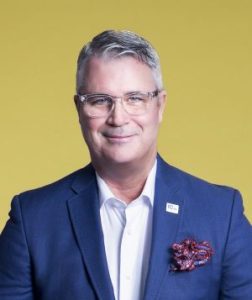
Michael Williamson
President and CEO
United Way of Southeast Louisiana