
New research reveals opportunities to strengthen support for
survivors of domestic and sexual violence across Southeast Louisiana.
Content note:
This article discusses domestic and sexual violence. If you or someone you know needs support, contact the National Domestic Violence Hotline at 800-799-7233 or text START to 88788. For sexual assault support, call 800-656-4673. Both offer confidential assistance. If you’re in immediate danger, call 911.
I believe deeply in the power of women, families, and communities to create extraordinary change. But I also know that change doesn’t happen because we simply want things to be better. It takes commitment. It takes courage. And it takes people willing to come together, confront difficult challenges, and do something about them.
At United Way of Southeast Louisiana, that’s what drives us every day.
Our work has always been about helping people find stability, opportunity, and a better path forward. We know that financial security, health, and family well-being are deeply connected. And when someone experiences domestic or sexual violence, those connections become even more important.
A person’s safety can affect their ability to work, care for their children, maintain stable housing, and plan for the future. For families already struggling to make ends meet, the challenges can be even greater.
That’s why supporting survivors and strengthening the organizations they depend on are such important parts of our commitment to helping every person in our region thrive.
And it’s why we asked a question that led to an important new research partnership.
What aren't we seeing?
For years, communities have relied on police reports, crime statistics, and 911 calls to better understand where domestic and sexual violence occurs. Those are important sources of information, and law enforcement plays an essential role in keeping our communities safe.
But we also know those reports don’t capture every request for help.
Many people reach out to crisis lines and community organizations for emotional support, safety planning, and assistance. We wanted to better understand what those requests could tell us about the needs of survivors across Southeast Louisiana.
So we brought together the people and expertise needed to find out.
United Way initiated a new study with VIA LINK and Tulane University’s Newcomb Institute to examine anonymized contacts with the 211 and 988 crisis lines across 10 parishes in Southeast Louisiana.
The resulting report, Mapping the Need: Using 211 and 988 Crisis Data to Strengthen Survivor Services in Southeast Louisiana, offers another valuable perspective on where people seek help and where additional services may be needed.
And some of its findings demand our attention.
Researchers identified recurring concentrations of domestic and sexual violence-related contacts in the New Orleans area, St. Tammany Parish, and Tangipahoa Parish. They also found that five of the 10 parishes studied had no identifiable physical domestic violence service location in the researchers’ inventory.
That finding doesn’t mean assistance is unavailable. Some services operate remotely, confidentially, or across parish boundaries. But it raises an important question: Are we doing enough to ensure survivors can access support, no matter where they live?
I believe we owe our neighbors a serious commitment to finding that answer.
Extraordinary partners. Shared commitment.
This work would not have been possible without the dedication of our partners.
I’m profoundly grateful to VIA LINK for its daily commitment to people experiencing some of life’s most difficult moments and for providing the information that made this research possible.
I’m equally grateful to the extraordinary team at Tulane University’s Newcomb Institute, including researchers Xin Gu, Vinita Mahanti, and Anita Raj, whose expertise helped turn that information into findings our communities can use.
Their work reminds us why strong partnerships matter. When we bring together research, community knowledge, and people committed to action, we can make more informed decisions about how to direct resources and strengthen support.
And the work doesn’t stop with this study.
Across Southeast Louisiana, organizations such as Metro Centers for Community Advocacy, Safe Harbor, Family Violence Program of St. Bernard, New Orleans Family Justice Alliance, Southeast Advocates for Family Empowerment, and others are doing the difficult, deeply personal work of helping people find safety and stability.
These organizations are among United Way’s community partners, and their work reflects the kind of commitment our region needs.
Our broader relationships with organizations such as the Louisiana Coalition Against Domestic Violence and other community leaders also remind us that meaningful progress requires cooperation across nonprofits, government, research institutions, and public safety.
We need every one of them.
Because no single organization can meet every need. And no survivor should have to depend on one organization having all the answers.
We know what women can accomplish when we unite.
This commitment is especially personal to me because I’ve seen the extraordinary strength of women who refuse to accept that things cannot change.
Through Women United, a leadership group of United Way of Southeast Louisiana, women across our region have spent more than two decades using their voices, resources, and collective influence to improve the lives of women, children, and families.
Since its founding in 2002, Women United has invested more than $4.4 million in local programs and helped advance public policies that strengthen protections for domestic violence survivors.
I’ve seen what happens when women come together with determination and purpose. We can bring attention to overlooked challenges, influence decisions, and help create opportunities that once seemed out of reach.
That history should inspire us, but it should also challenge us.
We have made meaningful progress. Yet too many survivors still face difficult choices and obstacles to accessing support.
This new research gives us an opportunity to ask better questions, strengthen partnerships, and help direct attention to communities where resources may be limited.
And I believe we have a responsibility to act on what we’ve learned.
Our next chapter requires all of us.
The findings of this study are important. But I don’t want this research to become another report that gets discussed, filed away, and forgotten.
I want it to start conversations. I want it to inform decisions. And most of all, I want it to help strengthen the programs and resources that survivors and families depend on.
There is extraordinary work already happening across Southeast Louisiana. Our opportunity now is to support it, connect it, and help it reach more people.
And that’s where you come in.
Whether you have time to volunteer, expertise to share, resources to give, or a voice that can help bring attention to this issue, there is a place for you in this work.
I invite you to connect with Women United and United Way of Southeast Louisiana to find a way to get involved that is meaningful to you. Together, we can support community partners, strengthen programs, and help expand access to resources for domestic violence survivors and their families.
I’ve spent much of my career working alongside people who refuse to give up on our communities. And I remain convinced that when we unite around a shared purpose, there is very little we cannot accomplish.
Our survivors deserve our commitment. Our partners deserve our support. And our communities deserve nothing less than our best.
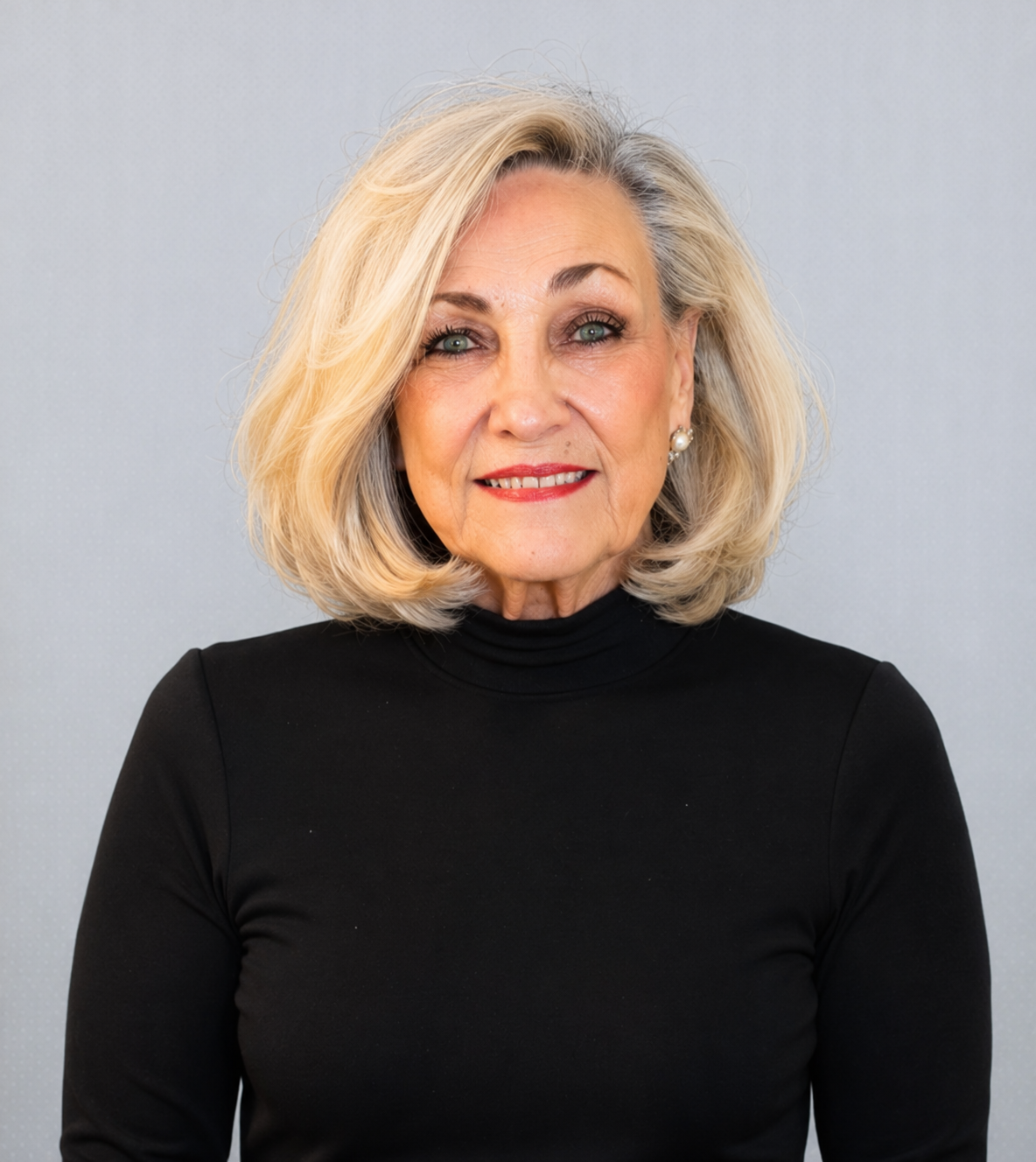
Charmaine Caccioppi
Executive Vice President and Chief Operating Officer
United Way of Southeast Louisiana