
UNITED WAY OF
SOUTHEAST LOUISIANA

Building Stronger
Communities, Together.

Connect

Blog

Press Releases

Radio

Newsletter

Event Calender

WHO WE ARE

UNITED WAY MOBILIZES COMMUNITIES TO ACTION SO ALL CAN THRIVE

True to our founding spirit, whenever there is a need, United Way is there. We bring a holistic approach to every challenge, actively listening and responding to local needs. Our reach across communities means we can share innovations and scale impact to improve lives around Southeast Louisiana.

OUR MISSION

Eradicate Poverty in Southeast Louisiana

With deep local roots, we see how our communities’ greatest challenges are connected — and how we can bring people and resources together to address them.

That’s why we show up our communities, always listening and ready to respond. Working together with our neighbors, we’re strengthening resilience and advancing health, youth opportunity, and financial security for all. With more than 100 years experience, we share ideas and innovations to drive holistic impact.

Every day, our communities show that when people unite to take action, change is possible. Together, we’re creating a future where everyone, everywhere can reach their full potential.

Our History

The United Way began 1887 in Denver when a priest, a rabbi and a minister recognized the need for cooperative action to address their city’s welfare problems, a result of the thousands of families who came to Colorado during the Gold Rush. They formed the Charity Organization Society of Denver, which sought to coordinate charitable services and to seek financial support for ten agencies in a combined fundraising campaign. This first campaign raised $21,700. 

In 1908, the first community planning department was developed at Pittsburgh Associated Charities. In 1913, a budget program began in Cleveland for the allocation of campaign proceeds to participating charities. The first Community Chest began in Rochester, New York in 1919. During World War I, more than 130 war-related services and relief organizations were formed and joined with the already established United Ways. Beginning in 1930, corporate giving began to assume great significance in campaigns and, by 1950, represented more than 40% of the dollars raised. Ninety percent of all monies raised today comes from corporate and employee giving. United Ways achieved a major milestone with the introduction and implementation of payroll deduction for charitable giving. In 1971, United Way of America was formed to aid in addressing the needs of community problem-solving through training of volunteers, statistical data evaluation, and development of national corporate support. Its purpose is to act as a service organization to the United Ways throughout the country. Today, there are 1,400 members of United Ways throughout the country. Each of these United Ways is autonomous and governed by a local volunteer Board.


ABOUT US

Since 1924, the United Way of Southeast
Louisiana has been a key force in addressing the most heartfelt and necessary issues of the communities we serve. Through the commitment of volunteer leadership, our United Way has worked to raise both awareness of needs and the funds necessary to address those needs.

HISTORY OF UNITED WAY

The United Way began 1887 in Denver when a priest, a rabbi and a minister recognized the need for cooperative action to address their city’s welfare problems, a result of the thousands of families who came to Colorado during the Gold Rush. They formed the Charity Organization Society of Denver, which sought to coordinate charitable services and to seek financial support for ten agencies in a combined fundraising campaign. This first campaign raised $21,700. 

In 1908, the first community planning department was developed at Pittsburgh Associated Charities. In 1913, a budget program began in Cleveland for the allocation of campaign proceeds to participating charities. The first Community Chest began in Rochester, New York in 1919. During World War I, more than 130 war-related services and relief organizations were formed and joined with the already established United Ways. Beginning in 1930, corporate giving began to assume great significance in campaigns and, by 1950, represented more than 40% of the dollars raised. Ninety percent of all monies raised today comes from corporate and employee giving. United Ways achieved a major milestone with the introduction and implementation of payroll deduction for charitable giving. In 1971, United Way of America was formed to aid in addressing the needs of community problem-solving through training of volunteers, statistical data evaluation, and development of national corporate support. Its purpose is to act as a service organization to the United Ways throughout the country. Today, there are 1,400 members of United Ways throughout the country. Each of these United Ways is autonomous and governed by a local volunteer Board.

LOCAL HISTORY

The local organization began in 1924, as the Community Chest began in New Orleans to meet the needs of a growing city. Raising $902,000 for local agencies, it established itself as one of the oldest United Way traditions in America.

 In 1952, New Orleans Community Chest evolved into the United Fund and raised $2.5 million. In 1974, the New Orleans United Fund joined United Way of America. As a member, the organization would benefit from national brand recognition, training, national campaign structure and other resources, while maintaining local autonomy and retaining 98.5 cents of every dollar raised. This health and human service organization was known as the United Way for the Greater New Orleans Area. In 1994, the Tangipahoa Area United Way merged with the United Way for the Greater New Orleans Area to provide funding to agency programs serving the residents in Jefferson, Orleans, Plaquemines, St. Bernard, St. Tammany and Tangipahoa Parishes. In 2005, Hurricane Katrina struck the Gulf Coast. Despite suffering major damage from extreme flooding at its own corporate headquarters and being unable to return to the facility for over 5 months, with 90% of the homes of its employees severely damaged or destroyed, United Way used its fiscal reserves to keep all 60 of its Community Impact partner social and human service agencies fully funded after the immediate aftermath of the hurricanes. In 2009, the Washington Area United Way merged with the United Way for the Greater New Orleans Area to provide funding to agency programs serving the residents in Jefferson, Orleans, Plaquemines, St. Bernard, St. Tammany, Tangipahoa and Washington Parishes. In 2010, United Way answered the call following the oil spill in the Gulf of Mexico distributing mini-grants to local organizations to assist those impact by the oil spill. In 2011, United Way for the Greater New Orleans Area changed its name to United Way of Southeast Louisiana to reflect the region the organization is now serving. In 2015, United Way of Southeast Louisiana partnered with United Ways throughout Louisiana on a groundbreaking study of financial hardship know as the ALICE Report. In 2016, United Way introduced our Blueprint for Prosperity, a road map to eradicating poverty in Southeast Louisiana.

PRESENT DAY

United Way of Southeast Louisiana offers programming and funding to partners and collaboratives serving the people of Jefferson, Orleans, Plaquemines, St. Bernard, St. Tammany, Tangipahoa, and Washington parishes.

No matter the challenge, United Way’s Blueprint for Prosperity – our holistic plan to eradicate poverty – and deep community roots mean we can find a way forward. We’re here to strengthen communities every day, advancing financial security, providing opportunities for young people, and improving health for all. Together with local communities, we’re building a future where everyone, everywhere, can thrive.

EXECUTIVE TEAM

At United Way, our people are our brand. Together, we mobilize people to take action in our community, so we can create a better future for us all.

OUR STAFF

United Way of Southeast Louisiana’s passionate employees inspire each other every day to tackle the toughest community issues. Named one of the Best Places to Work in New Orleans by New Orleans CityBusiness two years in a row, together, we’re realizing our vision of a world where every person in every community is thriving.

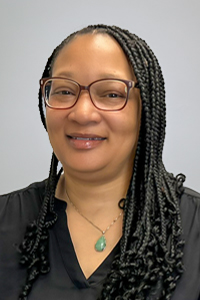
Helena Moreno